Once written, a symphony sounds forever. Like a cathedral, which even after its stones are tumbled down, remembers all those who traversed its threshold with a wish for eternity. Open a score to a symphony laying there all silent on its many staves, you’ll hear it suddenly leap to life as if it had been sounding all along.
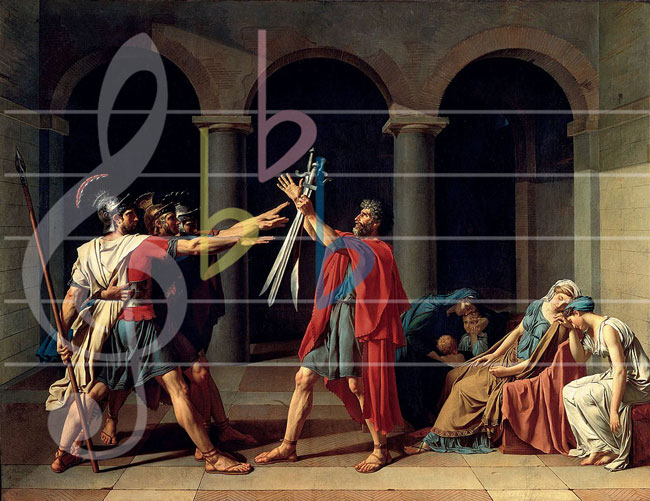
I’m not gifted with perfect pitch, but occasionally I’m arrested when the sounding of an E-flat chord catches my attention. I’m not sure why exactly, but I believe it is because E-flat major is a heroic key. It’s a portal into eternity — that is why it is heroic. E-flat major startles us when it appears all of a sudden in its shining armour — those three knightly flats, a holy trinity, standing guard permitting only the most heroic to enter.
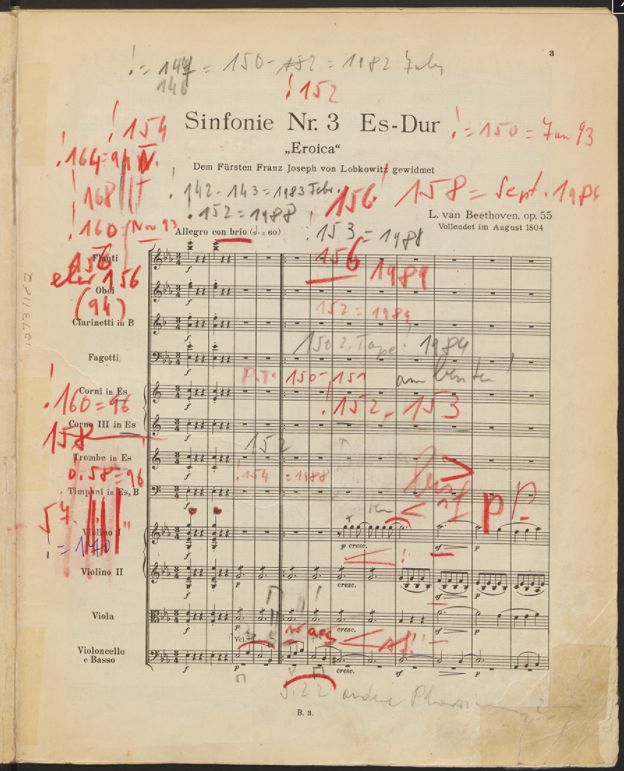
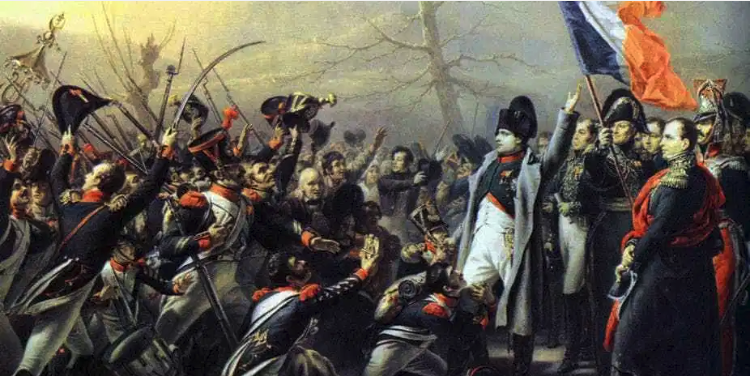
One night I met Napoleon. I, a time traveller, knew what was to come and could share certain discrete information with him concerning his future. I decided to start with Waterloo — the defeat that is — but I sweetened the news by explaining that, despite his defeat, he would be remembered as a hero. So it shouldn’t come as a surprise that, as I conversed with the Empereur, those opening E-flat chords from Beethoven’s “Eroica” Symphony boomed in my head.
When I returned, I determined I should gather all things E-flat close to me.
One of the commonest complaints about playing the low-D whistle is running out of breath. While a simple solution is to take more breaths, it doesn’t really address the source of the problem (and the musical phrasing of the piece you’re playing may not justify taking all those breaths). A better solution is to optimise the air moving through the instrument so that it’s not wasted. A common mistake when playing up the octave is to simply blow harder. While this works (sort of), it’s precarious and creates a harsh sound.
Fast Air
Consider this well-intentioned attempt to describe of air control in which the instructor describes “cold” and “hot” air.
Improve air usage
This is really good material although it never properly defines “hot” and “cold” air. Those terms are concepts only as the temperature of the air is never the issue. What’s at issue is the speed of the air as it passes through the instrument. Therefore, it’s better to use the more common terms, “slow” and “fast” air. In the video, the speaker correctly identifies that fast air (she says “hot” air) is produced by pursing the lips and supporting from the diaphragm. Not mentioned, and important to the process, is adjusting the tongue position in the mouth.
Fast air is a method of condensing the air as it moves through the whistle. It’s the same idea that aeronautics maintains when describing lift: Lift, the force that directly opposes the weight of an airplane, holds the airplane in the air. The low pressure created by the shape of the wing forces the air to move faster and pull the plane up.
Translated into whistle, you’re trying to make the air move faster by moving it through a smaller chamber. How you do that is with tongue position. Very often, players play with an “awe” vowel sound, but that moves the air through the instrument too slowly. It’s wasteful and consequently, the player runs out of air quickly. In the aeronautic lift analogy, it’s like putting a rocket booster onto a glider to achieve lift. Yes, the plane goes up but not through its design — it does it in spite of its design.
To play with fast air, practise by saying the word “Hugh”. Where does your tongue go? It should go up and forward. The effect is a smaller chamber through which the air passes, thus forcing the air to speed up (the Lift effect).
Octave Exercise With Fast Air
First, experiment playing with an “Awe” tongue position (what the nice lady in the video describes as “cold” air). You’ll find that you have to blow harder to play higher notes. But if you play with a “Hugh” tongue position, the upper notes will float out effortlessly. Experiment until you can control exactly when the note will jump the octave. My approach is to play with a fast air “Hugh” tongue position just backing off enough to give me room to control when I want to play up the octave.
Practice this. Play slowly and observe the slur marks.
December 9 marks an anniversary worth commemorating for however many years I have left on this planet: One year ago today, my right leg fell off.
Perhaps I exaggerate but from the standpoint of walkability it was, like, effectively gone. There was I on my way to a session to record Jeffrey Ryan’s Arbutus when I felt a sudden crunch from somewhere deep within the hip socket, and in that instant the short distance from escalator to approaching Skytrain seemed inestimably far. But like a pro, I made my way to the studio on my one good leg.
Say what you like about suffering makes…art…better, I do remember composer Jeffrey Ryan saying—as he piled me into the waiting taxi bound for home—that it had gone…very…well.
Daniel of course nearly fainted with horror at the sight of me, but I smiled a “Other than that Mrs. Lincoln, how did you like the play?” grin of denial about the whole leg affair and demanded we pull out the champagne to celebrate the victory.
Little did my besotted brain realize at the time how this little mishap with the right leg would catapult from fender-bender into the car wreck that is cancer. But then, who imagined last December, as they drained magnums of bubbly and extolled over their resolutions, what a 365-car pile up 2020 would turn out to be? We were so innocent back then.
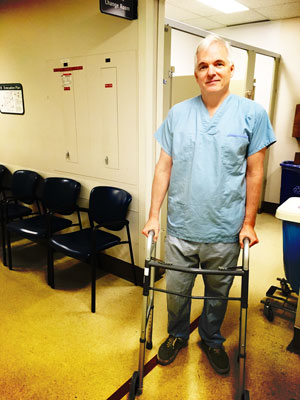
20 March 2020, Jason braves the corridors of St. Paul’s Hospital in search of an MRI machine.
Fast forward half a year later. Half a year of radiation, chemotherapy, crutches, walkers, canes, intravenous zolodronic acid treatments, Hickman line insertions, blood clots, blood thinners, shingles, tooth extractions, a stem cell transplant, the loss of family (my mother) and friends (my dear friend Caryn) to cancer, all etched in high relief against the backdrop of Covid-19; all of these things that made that day in late September when my beard and moustache floated away like milkweed in an autumn wind seem like a minor inconvenience. As indeed it was.
It was recently pointed out to me by someone with a more balanced view of Facebook than I possess that I am remiss in not providing an update of my cancer journey. In response, I’m happy to report that most of the tribulations I describe above are history and that I am on the road to recovery. Apart from some pain killers (for residual shingles-related neuropathic pain), and a blood thinner (for that blood clot that’s taking its sweet time to dissipate) I’m not currently on any treatment, although the nature of Multiple Myeloma (it’s treatable, but not curable) means that I will be going on to a programme of mild chemotherapy for the next couple of years.
I have heard that some people experience a health crisis in their early senior years (I’m 61 now so I think I qualify) but then once that’s dealt with, enjoy several more decades of excellent health. God willing, and some investment in a naturopath to keep me in tip-top shape, I’m working to stave off the return of the beast for many, many years to come. That’s my plan and I’m sticking to it.
Today marks the beginning of a new phase in my Multiple Myeloma journey. Multiple Myeloma is a form of blood cancer that affects blood production in the bone marrow, most notably the right hip and a couple of vertebrae down my back.
I finished chemotherapy a couple of weeks ago — a process I more or less powered through with few negative effects. This next leg of the journey is designed to wipe out the remainder of the cancer and give me a spanking new immune system.
When
What
23–31 August
I’m receiving Grastofil injections to coax stem cells out of the bone marrow and into the bloodstream where they can be collected. In the old days they used to perform a bone marrow biopsy, but now they give Grastofil injections. These mobilize blood stem cells out of the bone marrow and into the bloodstream where they can be collected more easily.
1–2 September
Once all my little stem cells are mobilized, I’ll be hooked up to a gizmo similar to a transfusion machine, which filters out stem cells from the blood where they can be put into cold storage (for up to seven years I’m told, so I can perform a reboot if I want and install a younger me).
4–5 September
I’m also going to have a Hickman Line (a type of catheter) inserted into my chest to facilitate injections and IV insertions over the coming weeks. To insert the Hickman Line, doctors make an incision in my chest into which they insert a tube that makes its way down my jugular vein to “just above my heart”. I’m a little freaked out about this procedure, but I’ve been told it’s really no big deal. Still, the Hickman Line will protrude from my chest for a month, during which I must not accidently whack the tubes sticking out of my chest or open one of the little plastic shut valves and allow my “blood from gush out”.
8 September
With all this gear in place, I’ll be ready to receive a super blast of chemo down the Hickman Line to destroy all stem cells — the good and the bad. I’m told this may also destroy all body hair so good-bye covid hairdo and that lovely lockdown moustache I’ve been working on.
More importantly, zapping those stem cells performs a factory reset on my immune system, requiring extreme vigilance against viruses or infections. My childhood inoculations also get tossed so at some point — once my new immune has rebuilt itself a bit (say, to that of a three-month-year-old) — I’ll need to be re-inoculated for chicken pox, measles, and polio, and so forth.
9 September
The day after the chemo blast, the doctors will transplant those preserved stem cells back into me. If all goes well, I’ll be good to go (less that all-important immune system) after a few weeks of recovery.
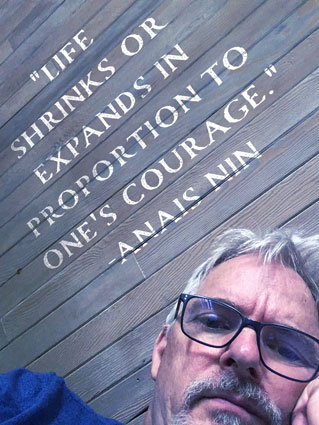
Recently I listened to a Simon Sinek talk in which he described courage as something that requires a community (it’s not solely an individual’s responsibility). Sinek aims his talks primarily at business leaders, but what he said rings true for me when I think about how my sense of courage has increased each time I receive a call, a text, a prayer, or a delivery of cookies. Having a community cheering me on has helped me power through whatever pain and difficulty the treatments have presented. And for that, I’m deeply grateful.
To my great delight, the long-awaited CD featuring works for solo woodwinds arrived in my mailbox today.
The CD, My Soul Upon My Lips, was produced by Redshift Records with funding from Canada Council. It features works by Jeffrey Ryan for flute, oboe, bassoon, alto saxophone, alto flute, clarinet, English horn, contra-bassoon, and me! The tárogató is the odd man in the lot. I recorded Ryan’s Arbutus for tárogató and piano (with Corey Hamm).
This release of this album has particular significance to me because the day of my recording session happened also to be the day of my mysterious accident that caused me to lose my mobility. On my way to the recording session, my right leg suddenly stopped working and I had to phone Jeffrey from the Skytrain station to come help me make my way to the recording studio. It was probably shock that got me through the session as it went rather well and we even finished up a half hour earlier than our time allotment. Four months on, the cause of the accident was diagnosed as cancer rather than simply a sports injury.
It looks like the official release of the CD is sometime in October, which will coincide with the for-the-time-being end of my cancer treatments.